DOPAMINS
DOPAMINS stands for Detection of Positron Annihilation Mission In Near Space and uses scintillators to detect antimatter in the stratosphere.
About the Project
The primary objective of DOPAMINS is to detect the annihilation of positron-electron in the stratosphere using a detector mounted on a high-altitude balloon. A positron is the antimatter counterpart of the electron. When high-energy cosmic rays hit the atmosphere, they create secondary particles, including antiparticles, through processes like pair production.
When matter and antimatter meet, they annihilate. Some positrons annihilate immediately, and some survive a bit longer. When a positron meets an electron, they annihilate and release two gamma rays of 511 keV, emitted in opposite directions (about 180°).
DOPAMINS aims to design an accurate and precise detection system to measure these events. This mission helps us understand the flux of positrons in the regions crossed by the balloon, and the detection system can be used as a basis for future antiparticle detection missions in space.
BEXUS Selection Workshop Bonn - 24/25. November 2025
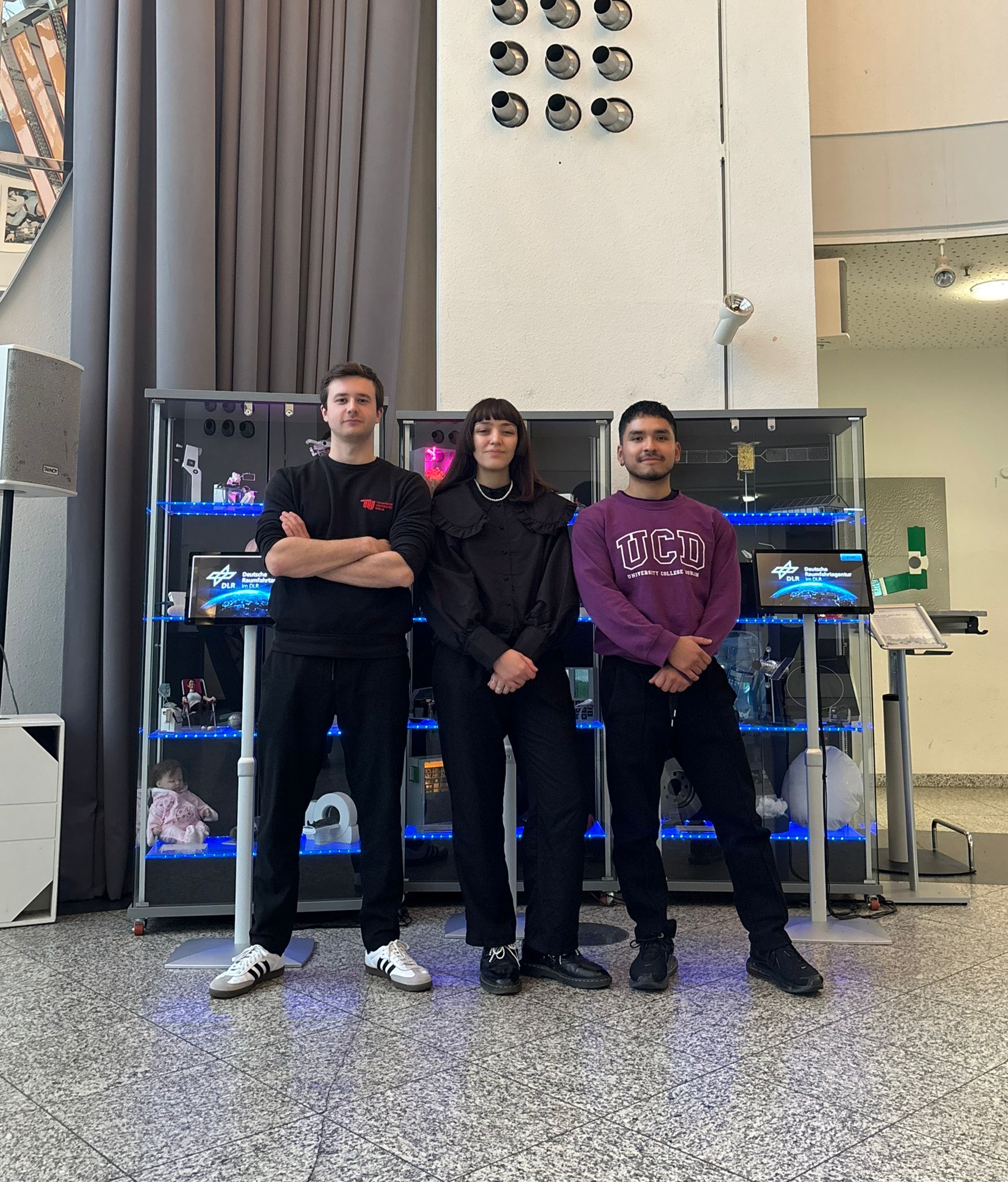
DOPAMINS has recently presented their project at “BEXUS Selection Workshop” at DLR in Bonn.
About the BEXUS competition
BEXUS (Balloon Experiment for University Students) is a European program that lets university teams fly their experiments on a high-altitude research balloon. The balloon reaches about 30 km altitude, allowing students to test scientific instruments and space-related technologies in near-space conditions. The program is run by DLR, SNSA, and ESA, and gives students hands-on experience with real aerospace missions.
The REXUS/BEXUS programme is realised under a bilateral Agency Agreement between the German Aerospace Center (DLR) and the Swedish National Space Agency (SNSA). The Swedish share of the payload has been made available to students from other European countries through a collaboration with the European Space Agency (ESA). EuroLaunch, a cooperation between the Swedish Space Corporation (SSC) and the Mobile Rocket Base (MORABA) of DLR, is responsible for the campaign management and operations of the launch vehicles. Experts from DLR, SSC, ZARM and ESA provide technical support to the student teams throughout the project. REXUS and BEXUS are launched from SSC, Esrange Space Center in northern Sweden.
Contact
We are always happy about interested students for MAGGIE and the club. You can contact us at maggie(@)bears-space.de and find regular updates on the Instagram channel @bears.space. The best way to reach us is to come to the weekly Bears meeting every Tuesday at 6pm in F11.